
Identity: Technical Considerations for Custom Yacht Signs
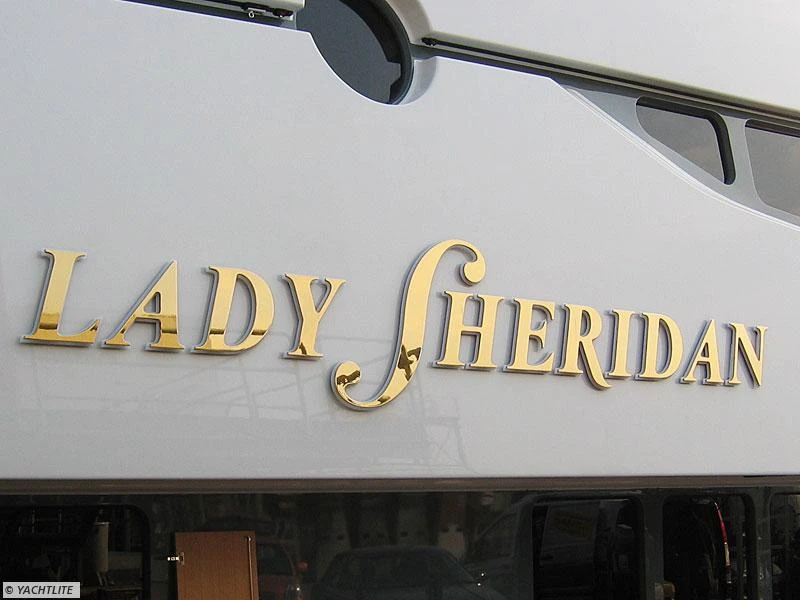
Installing a yacht’s name represents the final integration of its aesthetic and functional design. While often viewed through a purely decorative lens, high-end custom yacht signs require a rigorous understanding of naval architecture, electrical engineering, and material science. Selecting the right font or design, materials, and illumination is a technical process that defines how the vessel is perceived in every port of call.
At Yachtlite, we approach every project as a bespoke engineering challenge, ensuring the owner’s vision is translated into a durable, marine-grade reality.
Create your own custom yacht sign using our design generator!
Typography and Sizing
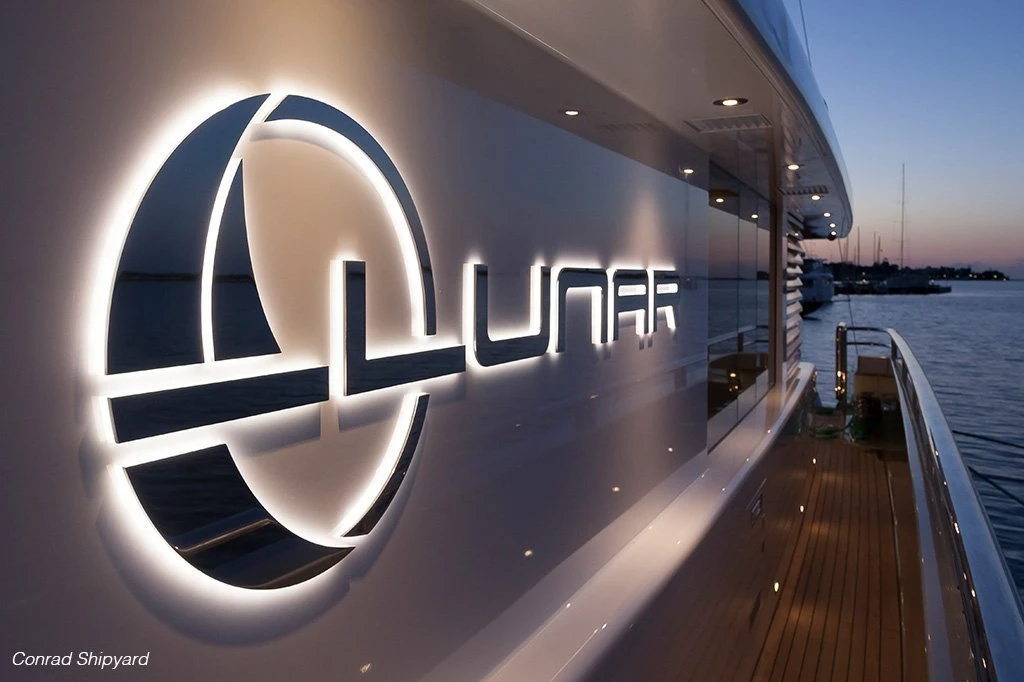
In maritime branding, picking a font is like giving a ship its own personality with visuals. However, there are some visibility rules that depend on geometry, and those rules change if the name is lit up.
- Serif vs. Sans-Serif: Serif scripts such as Bauer Bodoni or Didot offer a classic, elegant profile but present challenges in low-light conditions. These fonts require a 15% taller x-height at night to remain legible from a distance. In contrast, Sans-Serif fonts like Futura or Helvetica read cleanly at smaller sizes and are often preferred for modern, high-performance profiles.
View our portfolio of custom yacht signs.
Technical Reliability and Environmental Compliance
Constructing a sign that withstands the marine environment is an exercise in precision. When you ignore how materials react at sea, you inevitably end up paying for it in repairs and legal fees. At Yachtlite, we engineer every component to meet or exceed IP67/68 standards, ensuring electrical parts remain completely isolated from moisture, even during heavy following seas.
Beyond the hardware, environmental regulations are a critical factor. Many jurisdictions, particularly near turtle nesting beaches, enforce strict “Dark Sky” compliance. Improperly angled or overly bright lighting can result in substantial fines from harbour masters. We calibrate our systems to meet these local laws using shielded light paths where necessary.
The structural integrity of the vessel is equally paramount. Mounting metal lettering to an aluminium or carbon-fibre hull requires precise insulation to prevent galvanic corrosion. Furthermore, signage must account for the thermal expansion and contraction of the hull material in varying climates to ensure the watertight integrity of the mounting points. Superior sealing technology is essential to ensure that cabling penetrations do not become points of structural weakness or moisture ingress over time.
Consult with our engineers regarding your hull’s specific requirements.
Engineering for the Extreme: From Design to the Dock
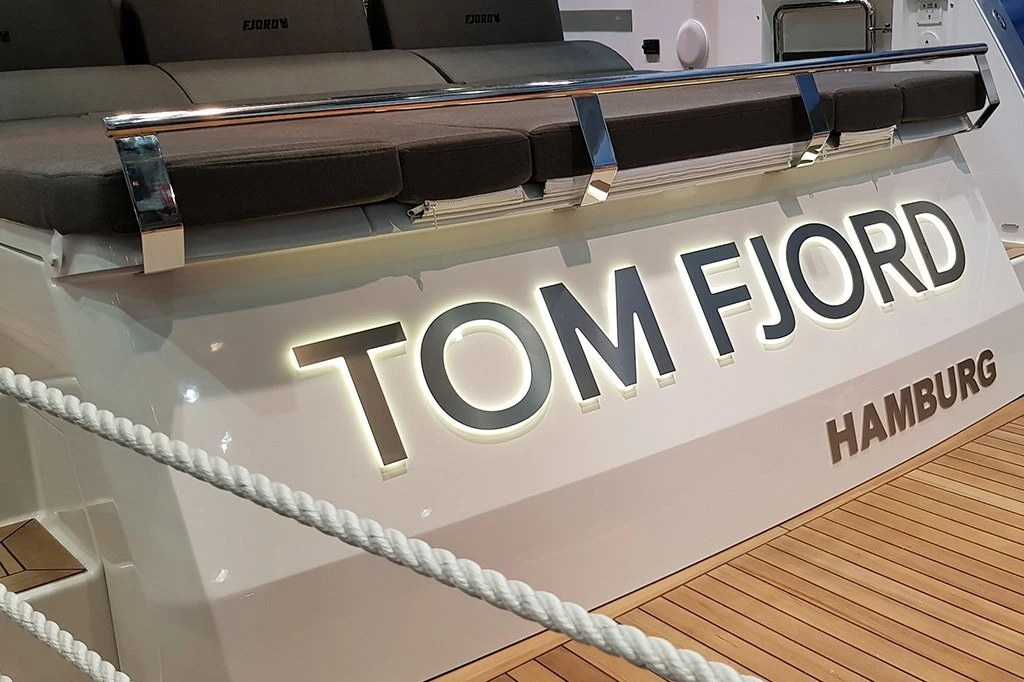
LED yacht name signs operate in one of the most demanding environments imaginable. Unlike shore-based architectural signage, marine installations must perform reliably under constant motion, vibration, and extreme temperature ranges – from polar regions to equatorial climates. Because a yacht is never static, the hull and superstructure are subject to continuous flexing and micro-movement caused by waves and engine vibration. Without proper engineering, these forces can compromise cable routing and electronic connections. Our mounting systems and adhesives are specifically designed to absorb this movement while maintaining long-term alignment and waterproof integrity.
The transition from a designer’s vision to a physical installation requires a deep feasibility analysis. On many superyachts, a name or logo is created early in the build process, often featuring extremely fine strokes or complex curves. Turning such artwork into a durable, evenly illuminated product sometimes requires small technical adjustments to preserve both the designer’s intent and the reliability of the system. This is particularly true when dealing with curved transoms or recessed installations in materials like teak. Precise surveying and early planning regarding drainage, mounting depths, and service access are essential to avoid alignment problems or complex modifications during the final stages of the build.
Expert Insights from Yachtlite
“From the outside, a yacht name sign looks simple,” says Stefan Wienecke of Yachtlite. “But behind the scenes, it is a highly engineered product. Every yacht moves; every surface is different, and access is usually limited. If we are involved early, we can help designers and shipyards avoid many of the typical challenges that appear much later during installation. Our job is to protect the visual idea while ensuring the system will still perform perfectly years from now, after thousands of nautical miles.”
Your yacht’s name is its definitive signature. Selecting the correct font, material, and illumination requires a sophisticated balance of aesthetic intent and uncompromising technical standards. Yachtlite provides the expertise necessary to ensure your vessel’s custom yacht sign is as resilient as the hull it is mounted upon.
Request a technical consultation with the Yachtlite team today.